Outcomes FATF Plenary October 2026

Publication details

Language

English 

French

Country
Topic

Plenary Meeting

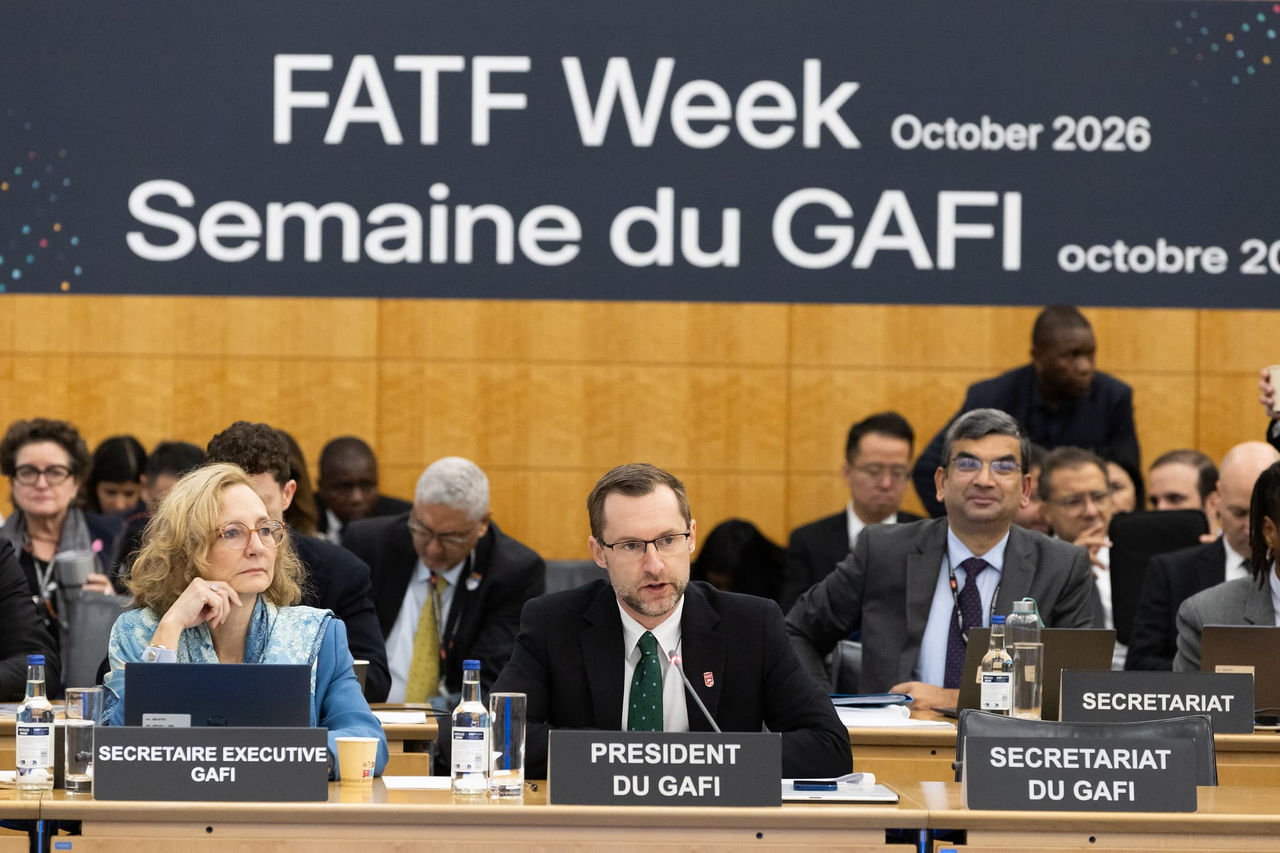
Paris, 30 October 2026 – The inaugural Financial Action Task Force (FATF) Plenary meeting under the UK Presidency of Giles Thomson concluded today, with countries agreeing global action to tackle evolving financial crime threats, including the rising threat posed by virtual assets, fraud and scam compounds.

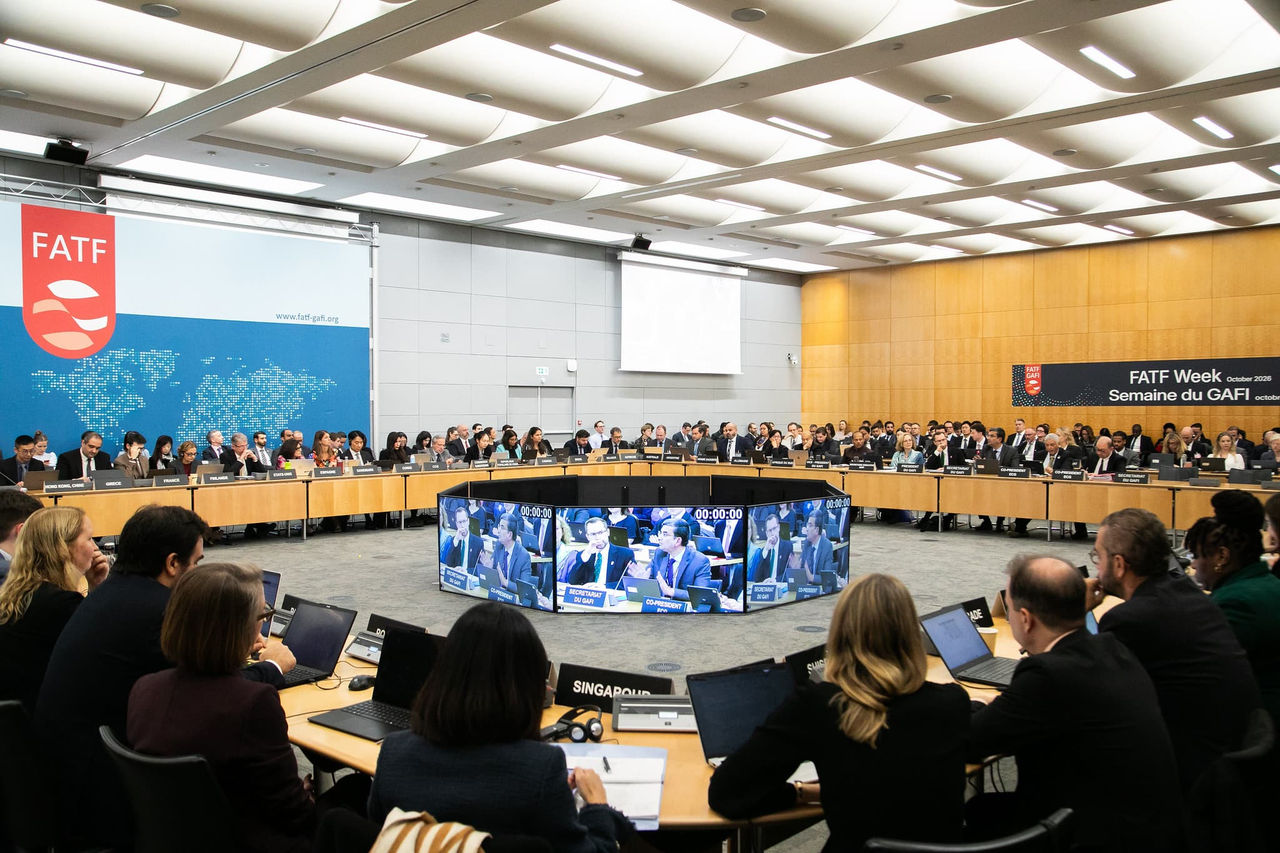
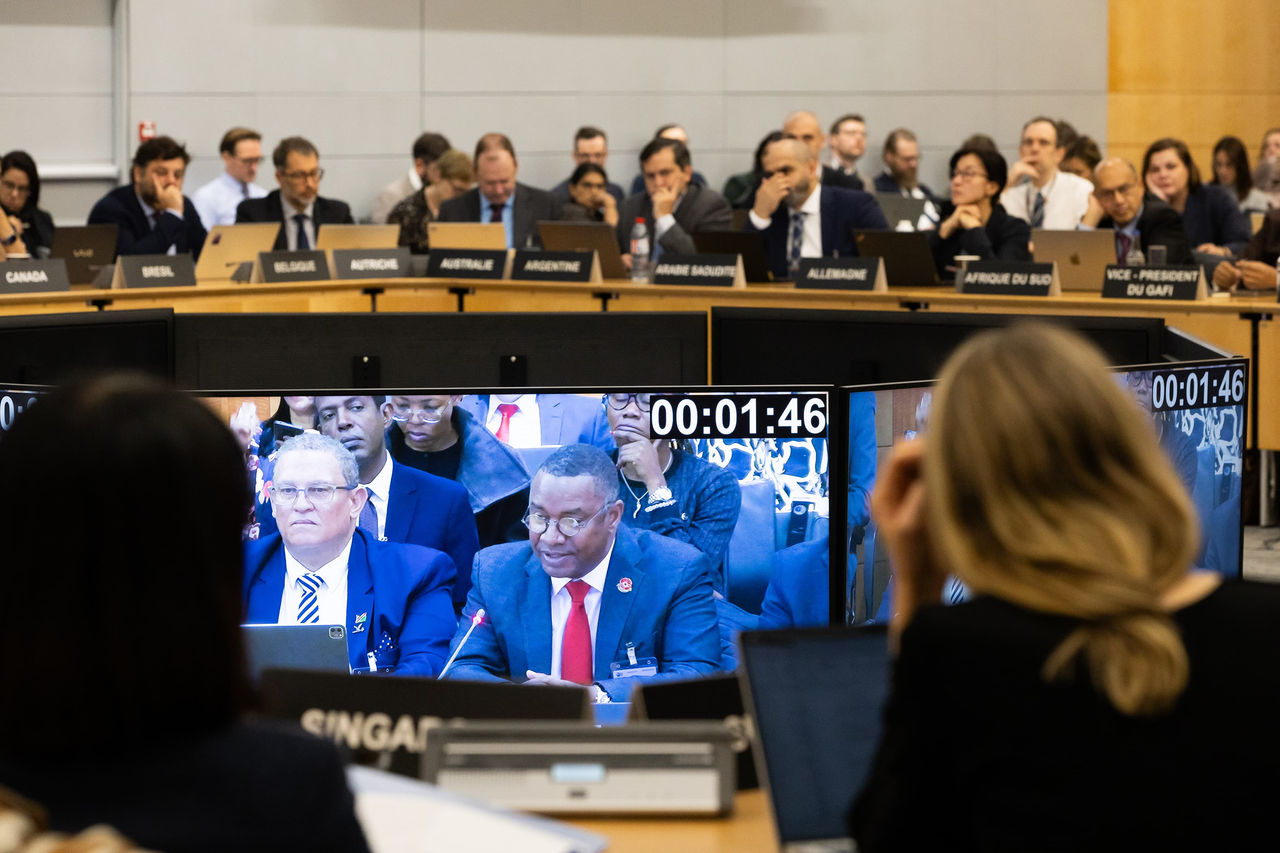
Delegates from across the FATF’s Global Network of more than 200 jurisdictions and observers gathered in Paris from 28 – 30 October. By invitation of the FATF President, representatives of Barbados, Namibia and Thailand participated under their own flags for the first time through the FATF Guest Initiative, which enhances the FATF’s global response to fighting financial crime.

In response to the FATF Ministerial Declaration of April 2026, the Plenary agreed to significantly accelerate the effective implementation of the FATF Standards on virtual assets (VAs) in jurisdictions with materially important VA activity. The Plenary recognised the need to urgently strengthen countries’ defences against the rising threat posed by the misuse of virtual assets for money laundering, terrorist financing and proliferation financing.

The Plenary approved a landmark report that elevates the fight against fraud and scam compounds as a global priority, providing a strong basis for the FATF and its Global Network to intensify efforts to identify, disrupt and deprive the criminal networks behind these operations of their illicit profits. This is the first output in the FATF’s Roadmap on combatting fraud under the UK Presidency, and will be followed by a wider study and recommendations for how the FATF toolkit can be used to combat fraud more broadly.

The FATF agreed to remove Bulgaria, Côte d’Ivoire, the Democratic Republic of the Congo and Monaco from its list of jurisdictions under increased monitoring following successful on-site visits, and the FATF updated its statements on jurisdictions under increased monitoring and jurisdictions subject to a call for action.

The Plenary adopted reports of Mexico and the United States under the new round of mutual evaluations. 

And the Plenary agreed to introduce tailored assessments for low-capacity countries, enabling a more risk-based prioritisation of high-impact reforms.


Strategic initiatives to step up global defences against illicit finance

Accelerating global implementation of the FATF Standards on the virtual asset sector

With criminal networks increasingly abusing virtual assets (VAs) for a range of illicit purposes, including fraud, scams, sanctions evasion, money laundering, terrorism financing, and proliferation financing, the Plenary agreed to launch a new targeted review and accelerated follow-up processes, to support jurisdictions to address gaps in implementation of the FATF Standards on VAs and virtual asset service providers (VASPs) more rapidly.

The targeted review will be based on objective criteria and will focus on jurisdictions with materially important VA sectors on the basis of their assessment status. The results will be published in June and October 2027. The FATF will work closely with relevant jurisdictions to support implementation efforts in this sector, including through ongoing engagement, training, and capacity-building initiatives.

Combatting illicit financial flows linked to scam compounds

The Plenary approved a new report, to be published next week, which examines the end-to-end illicit financial flows linked to scam compounds, which are among the most rapidly expanding forms of organised crime globally, and contribute significantly to rising levels of fraud and associated proceeds.

By drawing on operational insights from across the FATF Global Network, the report will help authorities to dismantle the increasingly integrated criminal business models and professionalised crime-as-a-service economy that sustain scam compounds around the world.

This report will inform the next phase of the FATF’s work on fraud as members consider how to further mobilise the FATF’s full set of capabilities to combat fraud in line with the FATF Ministerial Declaration of April 2026.

Compliance with the FATF Standards

High-risk and other Monitored Jurisdictions

Jurisdictions under increased monitoring (Grey List)

These jurisdictions are actively working with the FATF and the Global Network to address the strategic deficiencies in their regimes to counter money laundering, terrorist financing and proliferation financing. When the FATF places a jurisdiction under increased monitoring, it means the jurisdiction has committed to implement an Action Plan to swiftly resolve the identified strategic deficiencies within agreed timeframes. 

In its statement on Vietnam, the FATF expressed significant concern with Vietnam’s pace of progress. The FATF will consider next steps if Vietnam does not make tangible improvements to rectify its strategic deficiencies by the next Plenary meeting.

Jurisdictions no longer under Increased Monitoring (Removed from Grey List)

Following successful on-site visits, the Plenary congratulated Bulgaria, Côte d’Ivoire, the Democratic Republic of the Congo and Monaco for positive progress in addressing strategic anti-money laundering and countering the financing of terrorism and proliferation financing (AML/CFT/CPF) deficiencies identified during their mutual evaluations. The jurisdictions have completed their Action Plans within agreed timeframes and will no longer be subject to the FATF’s increased monitoring process.

The jurisdictions will continue working with their relevant FSRBs, GIABA (Côte d’Ivoire), GABAC and ESAAMLG (Democratic Republic of Congo) and MONEYVAL (Bulgaria, Monaco), to sustain improvements in their AML/CFT/CPF systems. 

Jurisdictions subject to a Call for Action (Black List)

The FATF identifies countries or jurisdictions with serious strategic deficiencies to counter money laundering, terrorist financing, and proliferation financing. These jurisdictions are subject to a call for action to protect the international financial system. 

The FATF has updated its public statements on two of the high risk jurisdictions, Myanmar and Iran, reinforcing its call on Myanmar to address the extensive fraud and scam activities emanating from the country, and the call on Iran to criminalise terrorist financing and establish a targeted financial sanctions regime in line with the FATF Standards.
 

Mutual Evaluations of Mexico and United States

The Plenary discussed and adopted reports of the FATF-GAFILAT mutual evaluation of Mexico and the FATF-APG-CFATF mutual evaluation of the United States. These reports assessed the effectiveness of the countries’ measures to combat money laundering, terrorist financing and proliferation financing, and compliance with the FATF Recommendations. The reports will be published in December 2026, following a quality and consistency review. 

Under the new round of mutual evaluations, countries receive a timebound Roadmap of Key Recommended Actions required within three years to strengthen the effectiveness of their defences against illicit finance. 
 

Ensuring a proportionate, risk-based approach to fighting financial crime

Strengthening support for low-capacity countries

The Plenary concluded a project that has examined challenges faced by low-capacity countries in building effective AML/CFT/CPF frameworks, recognising that financial integrity measures are critical for sustainable economic development, stability, and security.

In response to its findings, the FATF will take forward a series of measures to strengthen its support for low-capacity countries, including implementing a more tailored approach to mutual evaluations for a subset of developing countries, enhancing training of mutual evaluation assessors to promote a more risk-based approach, and fostering dialogue on effective capacity building in low-capacity countries.

Risk-based Approach

The Plenary also discussed ongoing work to enhance implementation of the risk-based approach by the private sector and public authorities to ensure AML/CFT/CPF efforts globally are focused on the greatest risks and outcomes.

To progress this key FATF priority, the FATF will host a Learning and Development Forum in Dallas, Texas, on 1 – 2 December 2026, focused on alignment on risk assessment and understanding risk in support of a more risk-based prioritisation of resources, a shift in financial crime risk management and supervisory culture, and greater effectiveness. This Forum will convene supervisors, financial intelligence units, law enforcement, financial institutions and non-financial institutions from across the world to develop a concrete policy statement – to be published shortly afterwards - to support a reinterpretation of how the risk-based approach should be implemented in practice.
 

Membership Issues

The FATF suspension of the Russian Federation continues to stand (see February 2024 statement).